
 Image 1 of 3
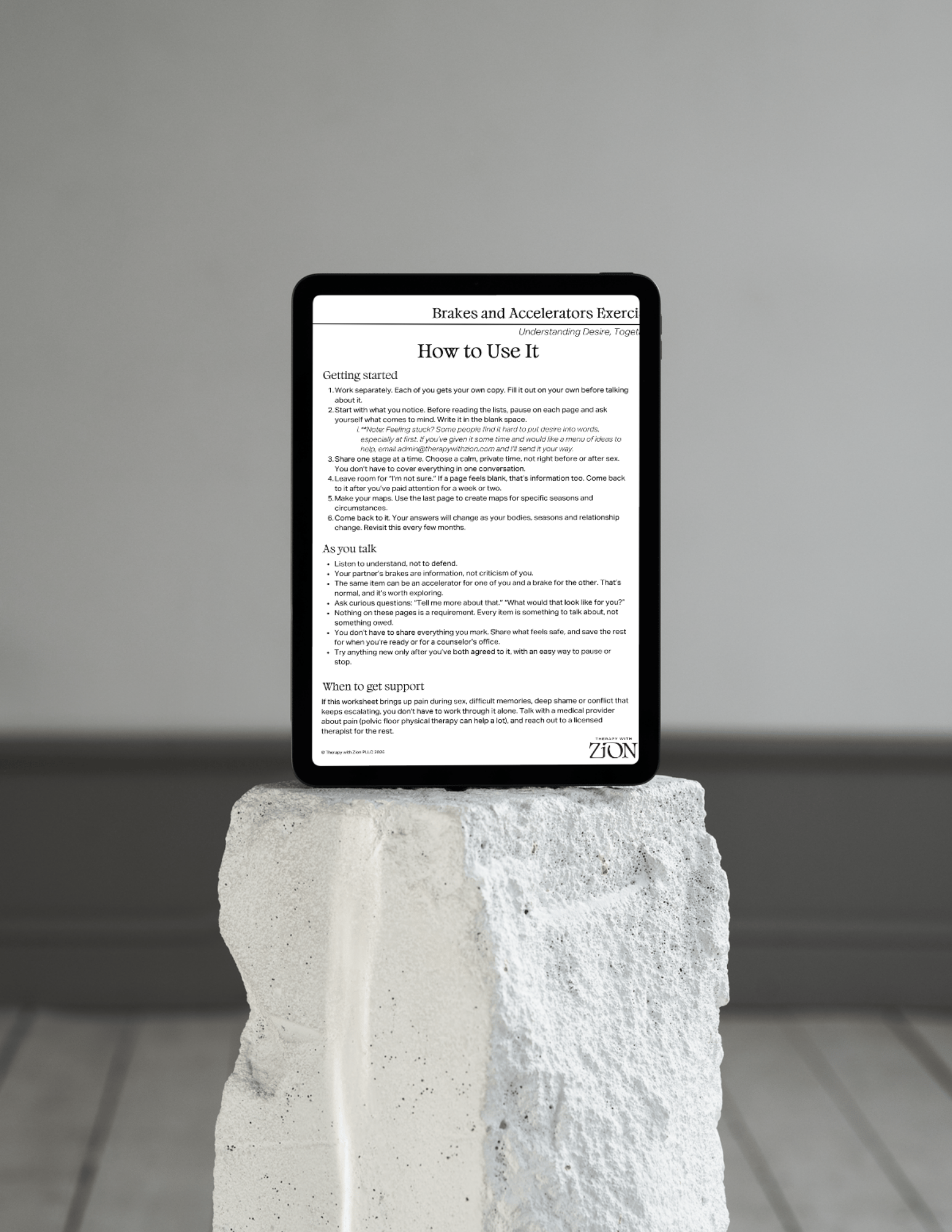 Image 2 of 3
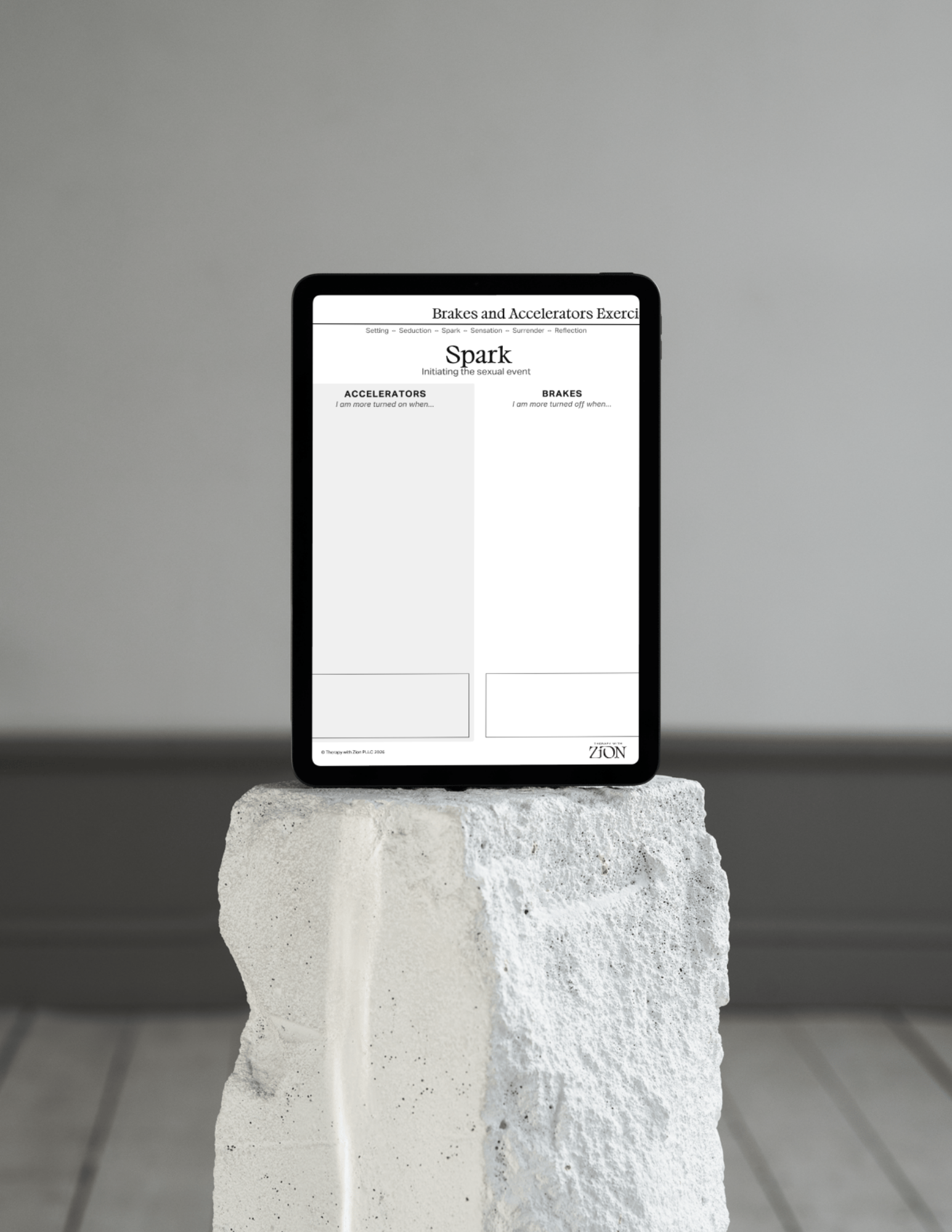 Image 3 of 3
Desire isn’t an on/off switch. It’s a dashboard. Something is always pressing the gas, and something is always riding the brake.
Most couples who say “I just don’t want it anymore” don’t have a weak accelerator. They have brakes nobody has named: the dishes still in the sink, the comment from Tuesday, the fear of saying what you actually like. This worksheet helps you and your spouse find both, so you can stop guessing and start learning each other on purpose.
What’s inside
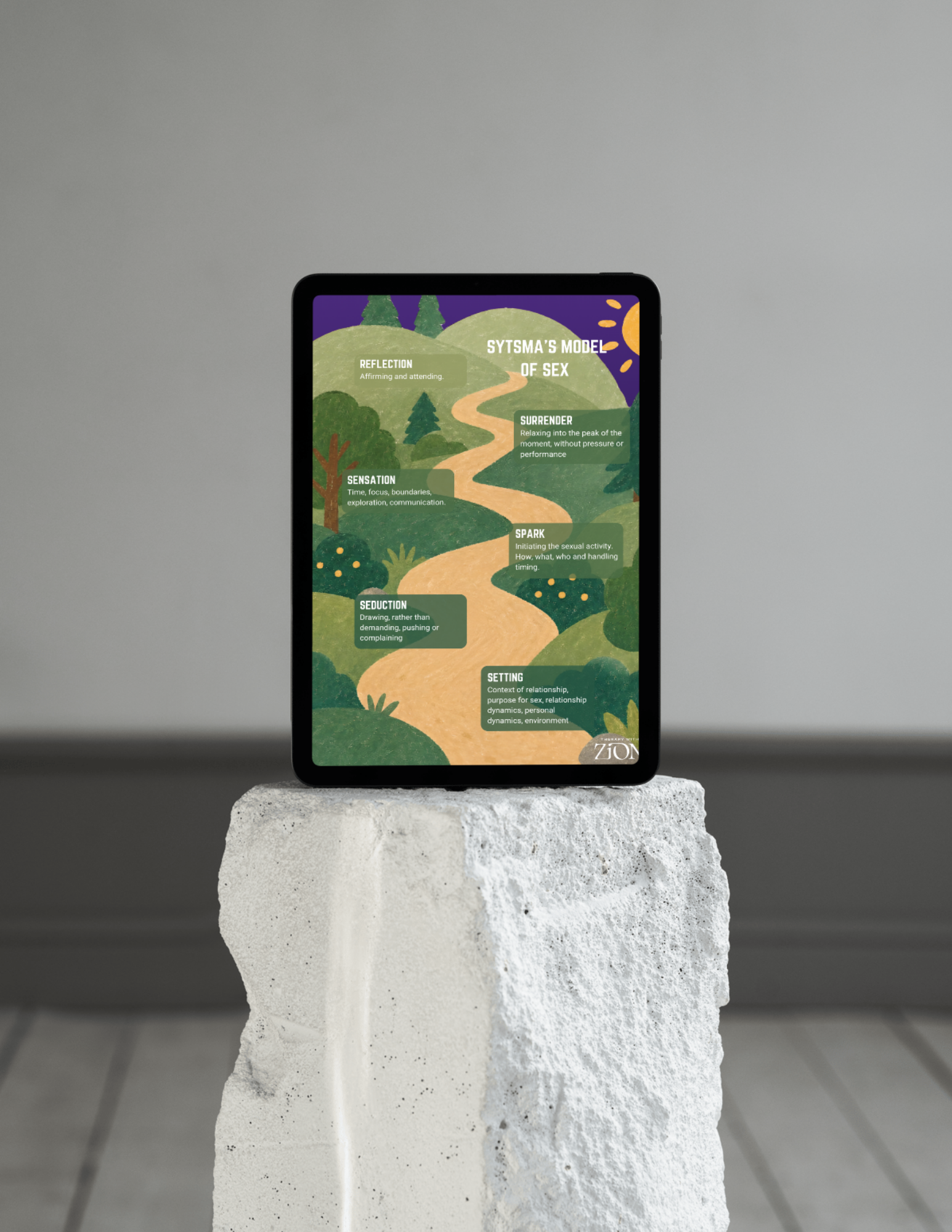
✓ The six stages of a sexual encounter (Setting, Seduction, Spark, Sensation, Surrender, Reflection), each with its own page of brakes and accelerators
✓ A simple explanation of spontaneous and responsive desire, so the partner who rarely feels “in the mood” first can stop wondering what’s wrong with them
✓ Space to name what draws you in, what shuts you down, and what you’d like to explore
✓ Guidance for talking about it: listening to understand, treating your spouse’s brakes as information rather than criticism, and leaving room for “I’m not sure”
✓ A final page for mapping what works in different seasons and circumstances
✓ A clear word on when to get support, from a medical provider or a therapist
Adapted from Dr. Michael Sytsma’s six stages and the Dual Control Model of sexual response.
Some brakes won’t come off at the kitchen table. Couples intensives are where we work on them together.